
Just Breathe
August 15 | Written by Darcy Chappel
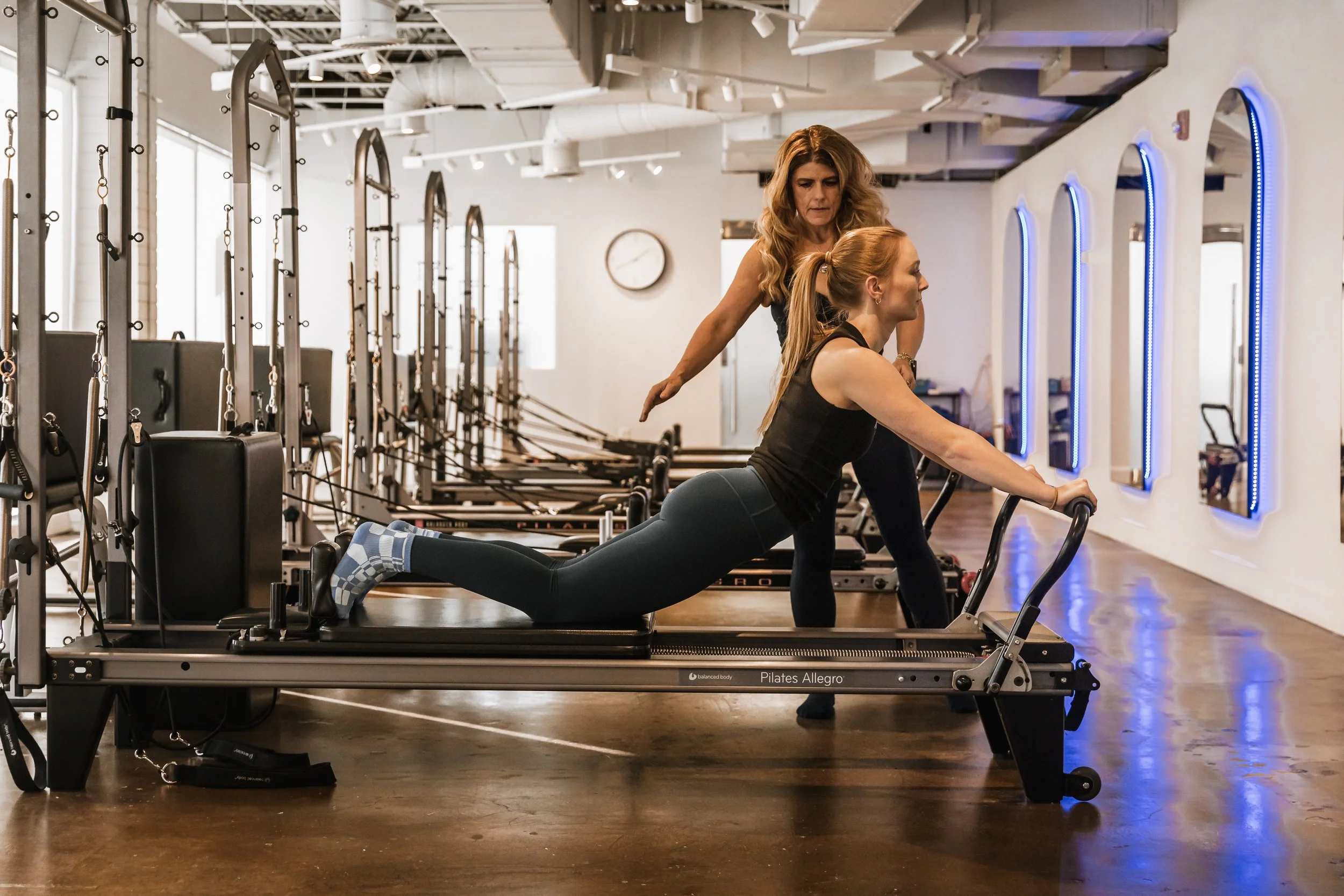
Every time you are in Pilates class you’ve heard your instructor say, “match your breath with the movement”, “inhale through the nose and out through the mouth”, or “don’t forget to breathe!”.
Maybe you rolled your eyes and thought “Of course I’m breathing, otherwise I wouldn’t be alive” or “Really? My breathing is automatic”. While both of those statements are true, when it comes to Pilates there is more involved in breathing than meets the eye. Instead of just an automatic response, you are breathing with purpose.
Regular breathing vs Pilates breathing
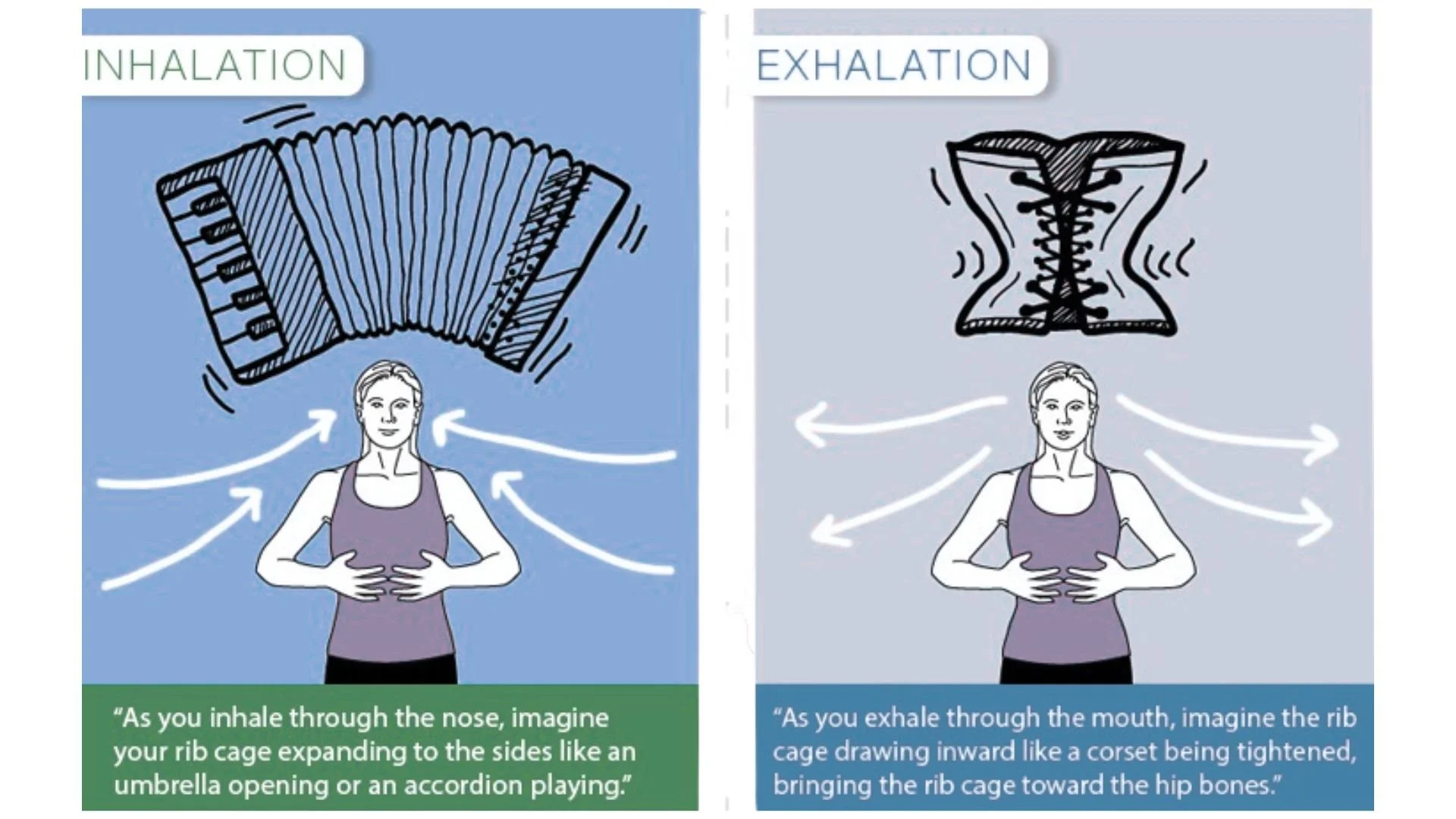
As you go about your day, you automatically inhale and air fills your lungs, pushing the belly and diaphragm outward, and then completely relaxing on the exhale (often referred to as diaphragmatic or belly breathing). Often, these breaths are quick and shallow.
Pilates breathing (otherwise known as lateral or thoracic breathing), on the other hand, uses your ribs, not your belly. When you slowly inhale through your nose your ribs expand, releasing the mid back and improving lung capacity. As you exhale through your lips, the ribs draw back in and the lower abdominals pull inward engaging your core. Imagine an accordion opening when you inhale and then compressing as you exhale.
So how does your breath tie into how effective your Pilates session is?
Breathing is the first Pilates principle identified by Joseph Pilates. He stated that the breath is integrated into every movement in order to focus our awareness on what we are doing, to improve the flow of oxygen through our bodies and to improve the capacity of our lungs.
Picture yourself lying on your reformer for footwork, extending your legs as you take the carriage away and bending the knees as you bring the carriage home. You are continuing to run on autopilot and are quickly moving in and out without any awareness of your breath. You start to feel tension in your neck and shoulders and feel no connection to your muscles. Now imagine practicing your Pilates breathing in the same scenario. The movement slows down as your breath guides the movement, your core stays engaged, your posture is supported, and you can feel your muscles engaging, making your movements more efficient.
To inhale or to exhale– that is the question!
Now that you understand how Pilates breathing works, you may wonder how to best use it during exercises. The general rule is inhale to prepare and then exhale on exertion (the hardest part of the exercise), which forces your deep abdominal muscles and pelvic floor to contract and engage more intensely. As you become more skilled in Pilates breathing your instructor may have you reverse this, but only once you have mastered the technique and demonstrated your ability to use breathing as the foundation of your Pilates practice.
Whatever you do, please don’t hold your breath during challenging exercises! This can cause tension, inhibit the flow of oxygen to your muscles, and affect your performance and ability to maintain proper form.
Let your intentional breathing determine how quickly or slowly you perform an exercise. Instructors would rather see you find that connection between your breath and the movement instead of racing through an exercise without any intention.
Other types of breathing
While lateral breathing is the signature breathing method during Pilates, you may practice belly breathing at the beginning or end of a class to help calm your mind. Some specific exercises may also use specialized breathing techniques. Let’s not forget about the Hundred, where you inhale for five counts and exhale for five counts as you hold a crunch and pump your arms – but that is a whole other topic to be addressed in a future article!
Darcy Chappel | Reformer Pilates
Darcy has completed the 525-hour Balanced Body Comprehensive Pilates Instructor program, focusing on Mat, Reformer, Chair, Barrel, Trapeze, and Tower instruction. A lifelong fitness enthusiast, Darcy loves learning new ways to stay healthy and active. She completed Trauma-Informed Yoga training, was certified as an AFAA personal trainer, and competed in the Reno-Tahoe Odyssey on an ultra team in 2022.
A UNR graduate, Darcy worked as a caseworker with children and families for over 20 years before retiring from Washoe County in August 2025. Her vision is to promote creative ways to keep the body moving, help others find their mind-body connection, and encourage body positivity. Outside the studio, Darcy loves traveling and spending time with her husband of 34 years, Brit, and her three adult children, Haley, Charley, and Tanner.
